In line with the implementation priorities of China’s 14th Five-Year Plan for a Modern Energy System and the Guiding Opinions on the High-Quality Development of Distribution Networks under the New Situation, distribution networks are undergoing digital and intelligent upgrades, with broad adoption of primary–secondary integrated equipment.
However, many existing medium-voltage (MV) switching stations and distribution substations have been in service for many years and lack distribution automation capabilities. Microprocessor-based protection relays and distribution terminal units (DTUs) are often deployed independently and use inconsistent communication protocols. Consequently, trip events and disturbance-recording data cannot be readily integrated with the distribution automation master station. Data silos are widespread, limiting operational coordination and efficiency. In retrofit projects, separate hardware for protection relays and DTUs must also be configured redundantly, increasing both capital and maintenance costs. Meanwhile, the expansion capability of the current State Grid standard Decentralized DTU is limited, making it unsuitable for facilities with a large number of switchgear bays.
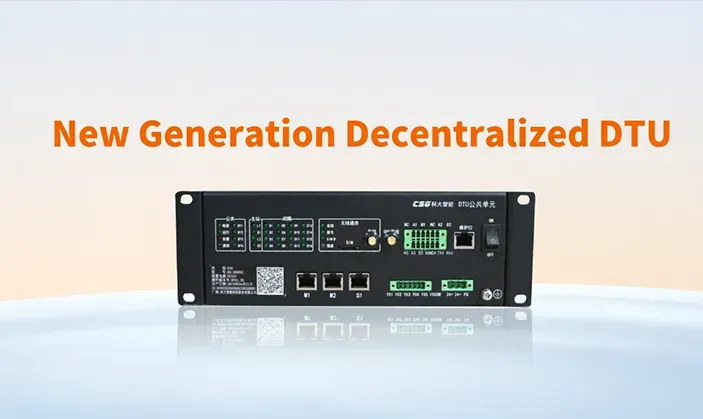
To address these challenges in the intelligent retrofit of distribution facilities, CSG has redesigned the architecture of distribution-site terminals around a modular, distributed approach and independently developed a new-generation Decentralized DTU. The solution provides a one-stop automation-upgrade option for legacy MV switching stations, distribution rooms, and ring main units (RMUs), delivering a solid hardware foundation for digitalized distribution-network operation and self-healing service restoration.
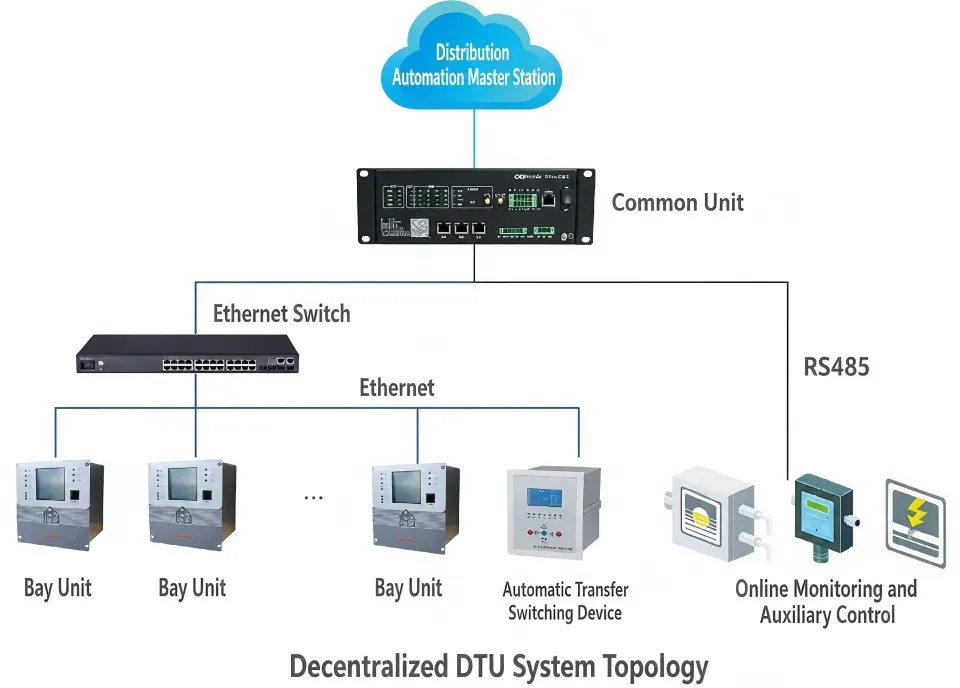
CSG’s new Decentralized DTU is a microprocessor-based distribution-site terminal consisting of two core modules: bay units and a common unit. With Synchronization and coordinated operation, the solution is compatible with both looped and radial distribution systems and is designed for use with MV switchgear, including metal-clad switchgear and RMUs.
1. Bay Unit — An Independent Protection, Control, and Monitoring Hub
Installed independently in the low-voltage compartment of each switchgear cubicle, each bay unit is dedicated to a single switchgear bay. In addition to the distribution automation functions of a conventional DTU, it integrates microprocessor-based protection functionality, creating a new terminal that combines distribution automation with protective relaying.
Each unit can independently provide protection for individual feeders, including overload, short-circuit, earth-fault, anti-pumping, non-electrical quantity, and under frequency protection. It can also coordinate with the common unit to support feeder self-healing following a fault. With one terminal per cubicle and independent fault handling for each bay, the solution significantly improves system operating stability.
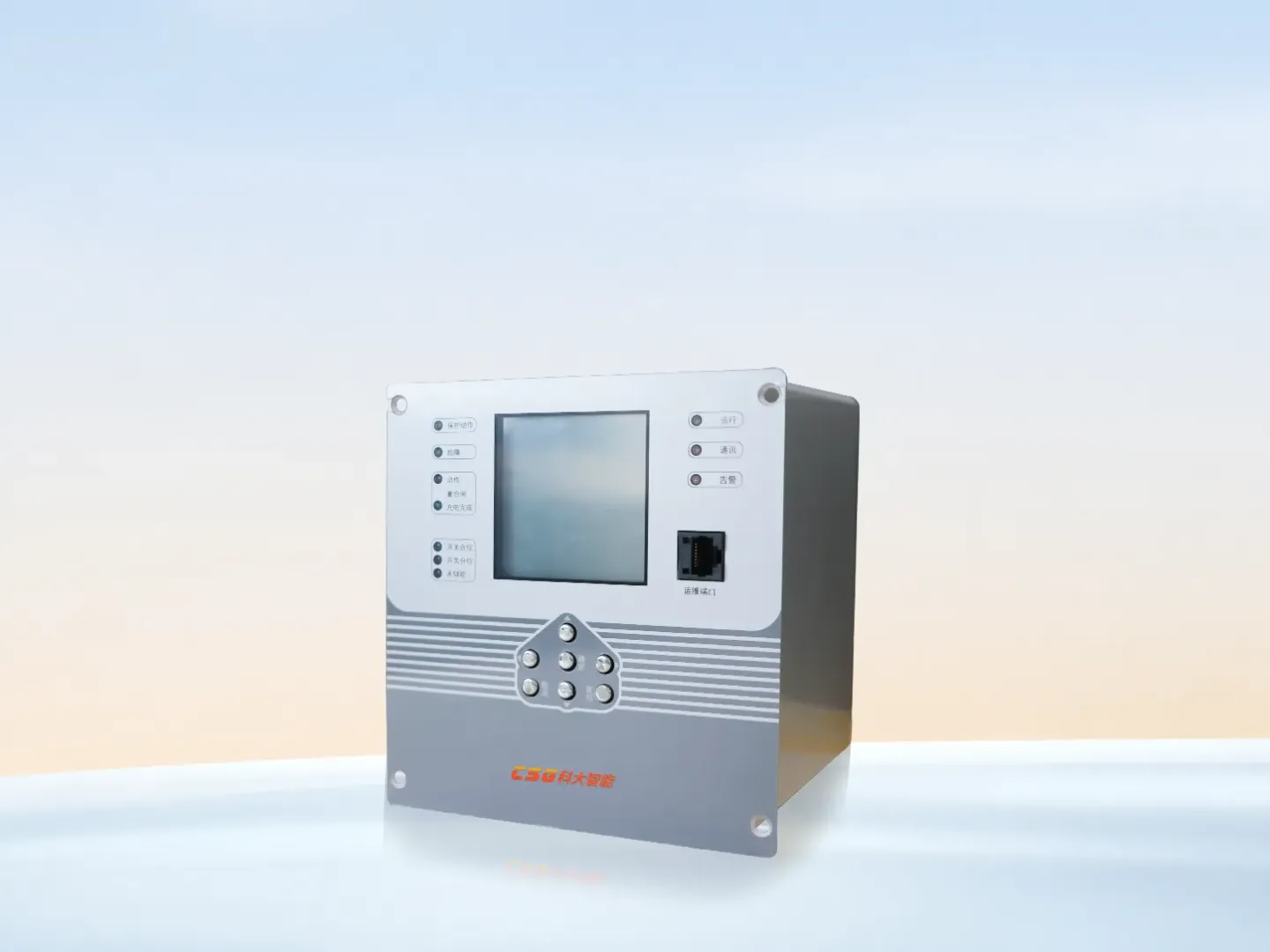
Decentralized DTU Bay Unit
2. Common Unit — Data Aggregation and Communications Hub for the Entire Facility
The common unit centrally aggregates all data from bay units, including telemetry, status indications, protection events, fault-recording data, energy metering data, and online equipment status. It can transmit complete facility-level information to the distribution automation master station.It also receives remote-control commands, protection-setting commands, and time-synchronization commands issued by the master station and accurately routes them to the relevant bay units. This enables centralized data management and unified remote dispatch for an entire facility.
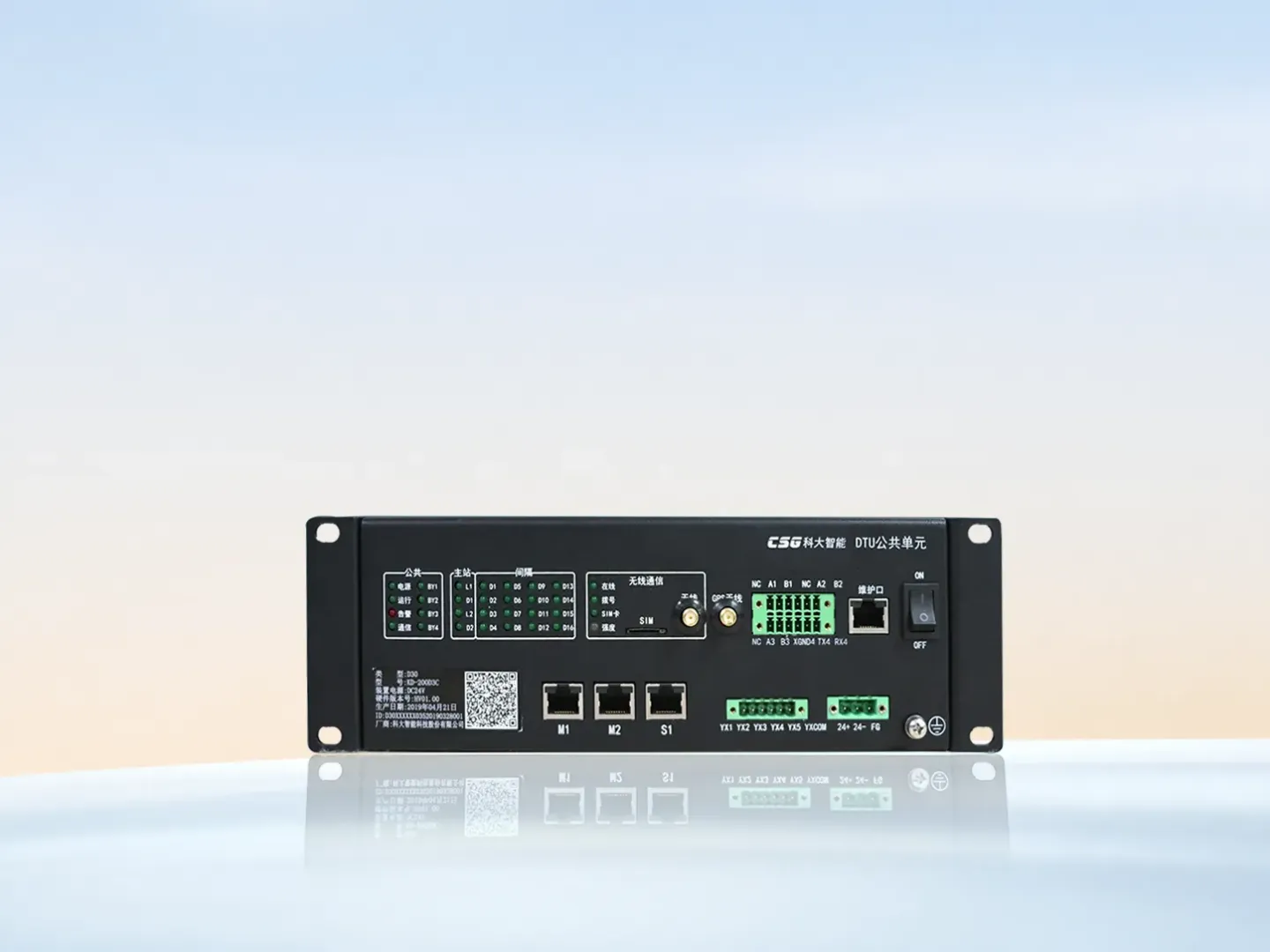
Decentralized DTU Common Unit
Together with the communications system, the two units form a complete distribution automation system. In coordination with the master station, the system supports the full self-healing workflow: real-time feeder monitoring, rapid fault identification, isolation of the faulted section, and rapid service restoration to unaffected sections. It is applicable to a broad range of MV distribution facilities, including switching stations, distribution rooms, and prefabricated compact substations.
Core Technical Advantages
1. Multi-Dimensional Self-Healing Control Strategies with Millisecond-Level Fault Response
The system incorporates multiple local feeder automation schemes. It can perform fault location, fault isolation, and load transfer without relying entirely on master-station commands, substantially reducing outage duration and the affected area while improving supply reliability within the service area.
2. Comprehensive Feeder-Bay Protection for Safe and Reliable Operation
The solution covers protection logic for a wide range of MV cable feeders and is compatible with different grounding configurations and types of primary switchgear equipment. Protection settings are independent for each bay and can be enabled or disabled individually. When a feeder abnormality occurs, rapid tripping helps mitigate the risk of equipment damage.
3. Separated Protection-and-Measurement Architecture for More Granular Fault Diagnosis
Protection and measurement functions are separated in both hardware and logic. Voltage and current acquisition data, fault-recording data, and protection-operation data are stored and analyzed separately. This architecture enables more accurate differentiation between measurement anomalies and feeder faults, improving fault tracing and defect analysis.
4. User-Friendly Human–Machine Interface for Intuitive Local Operation
The equipment includes clear status LEDs and a local operation-and-maintenance interface. Operating, communications, fault, and breaker open/close status are immediately visible. Field commissioning, protection-setting changes, and fault review can be performed without complex auxiliary equipment, allowing frontline operations and maintenance personnel to work efficiently.
5. Compact Design for Agile Retrofits of Legacy Distribution Facilities
The compact units are designed to fit the confined low-voltage compartments of legacy RMUs. They reduce the need for extensive switchgear modifications or wide-area outage-related construction, enabling low-disruption upgrades of existing facilities while substantially shortening retrofit schedules and reducing construction costs.
6. Standardized Terminal-Block Design for Flexible, Efficient Installation
A standardized terminal layout clearly separates power and control circuits and supports orderly wiring and scalable standardized installation. During subsequent maintenance or unit replacement, extensive rewiring is not required, reducing field-installation complexity and associated safety risks.
Value of the Preferred Solution for Automation Retrofits of Legacy Distribution Facilities
For utilities: Enables network-wide visibility, measurement, and controllability across the distribution network; supports a self-healing distribution network; reduces outage time caused by feeder faults; and improves power-supply quality and digital operational management.
For engineering and construction: The compact, modular design is well suited to retrofit projects involving existing switchgear. Installation is straightforward and retrofit cycles are short, reducing civil-work and switchgear-modification costs.
For system compatibility: Compatible with RMUs, metal-clad switchgear, switching stations, and distribution rooms. It supports both looped and radial feeders and offers strong scalability.
CSG’s new Decentralized DTU has now been deployed at scale in selected areas of East China, covering intelligent retrofit projects for switching stations and distribution rooms. After commissioning, dispatch centers can remotely access real-time operating data for every feeder at a facility, including current, voltage, switch position, and energy data. Feeder faults can be automatically alarmed and accurately located, while fault isolation and service-restoration efficiency are significantly improved.
Its compact, distributed architecture is fully suited to retrofits of legacy switchgear. Supported by shorter construction cycles, lower retrofit investment, and stable, reliable operation, the solution has received strong recognition from power-supply utilities and has become a mainstream option for automation upgrades of existing distribution facilities.